


The Bell Rings Again: Tithe Church Bell Recreated for Ukraine’s 35th Anniversary of Independence — Hear What It Sounded Like Almost 800 Years Ago
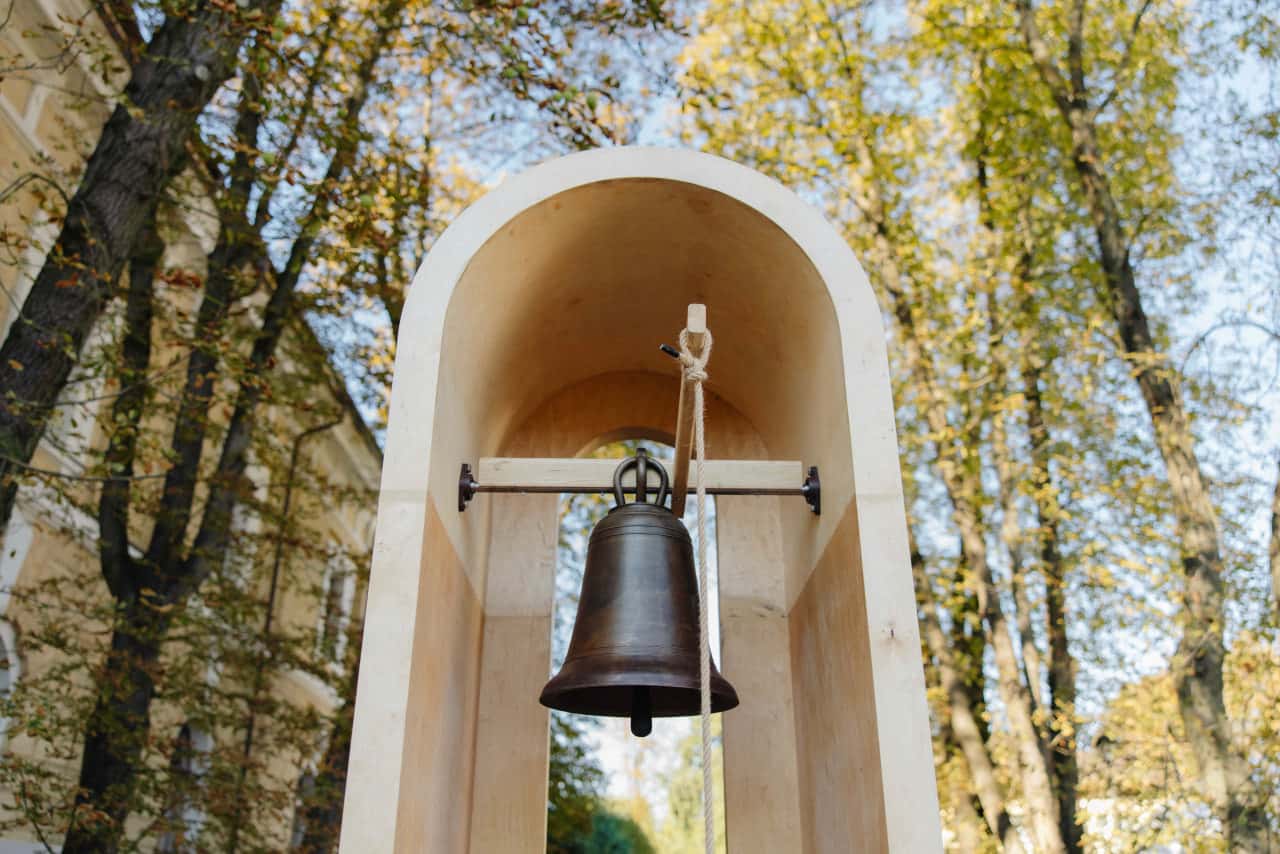
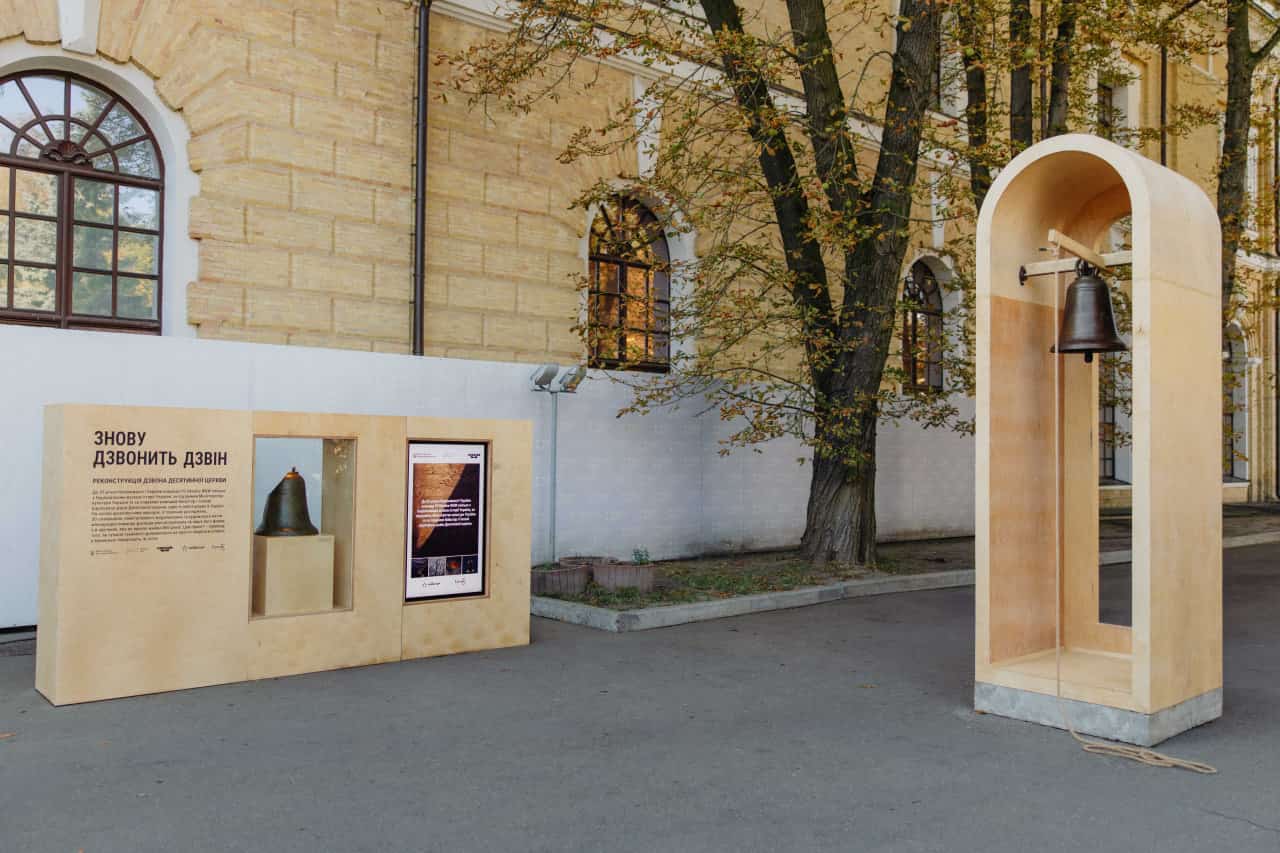
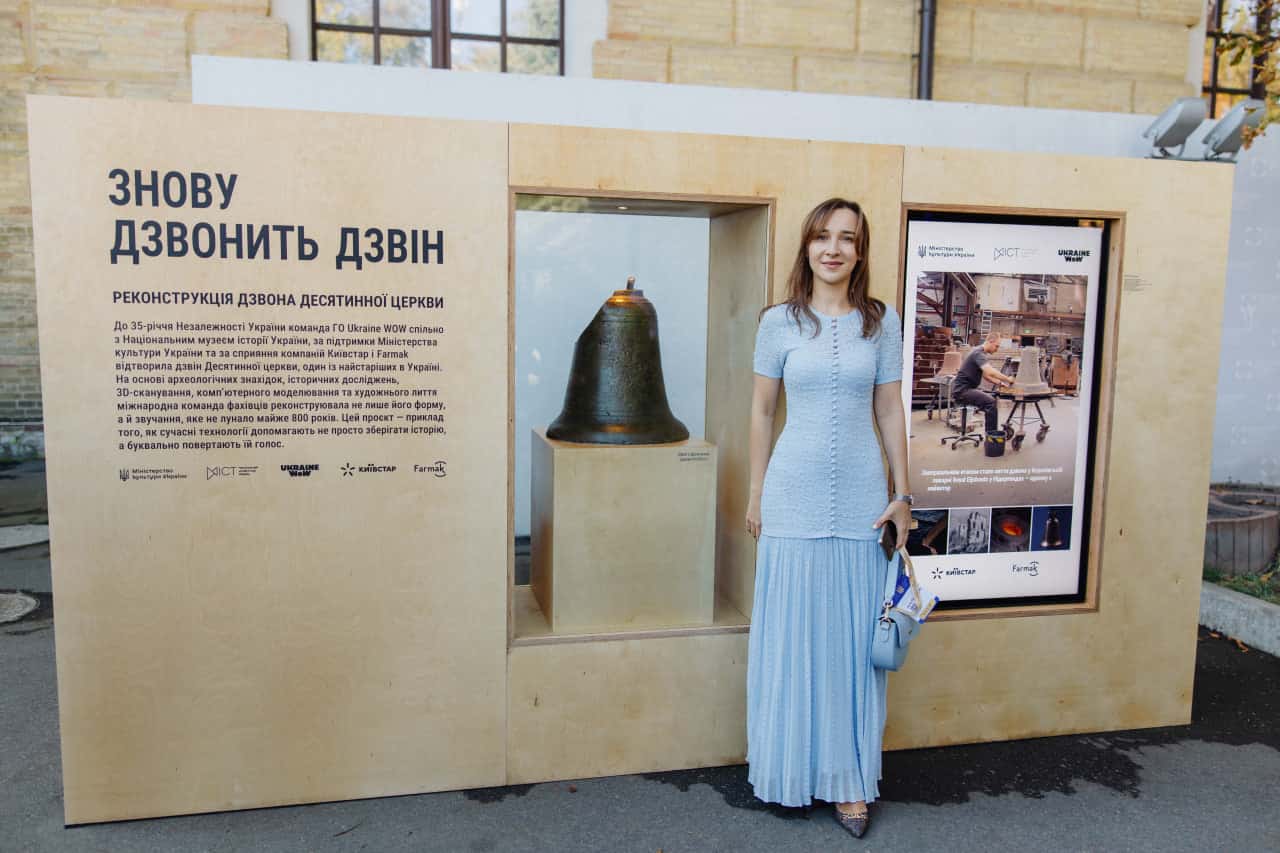
For the 35th anniversary of Ukraine’s independence, the NGO Ukraine WOW, in cooperation with the National Museum of the History of Ukraine and with the support of the Ministry of Culture of Ukraine, has recreated the bell of the Tithe Church — one of the oldest bells in Ukraine.
The Tithe Church was founded at the end of the 10th century by Prince Volodymyr the Great. It became the first stone church in the Kyivan Rus. For centuries, its bells called Kyiv residents to worship, while also announcing holidays, dangers, and important events. But in 1240, the church was destroyed during the Mongol invasion, and the bell was lost.
The story continued in 1937, when the prominent Ukrainian archaeologist Theodosius Movchanivskyi discovered a fragment of the bell during an excavation. Only 60% of its surface had survived; the clapper and mounting were missing. From then on, the bell fragment was preserved in the museum collection as a unique artifact.
“In the spring of 2026, we saw the bell fragment in the collection of the National Museum of the History of Ukraine. As we learned more about its history, we realized that we were looking at a true relic — evidence of the continuity of Ukrainian statehood. We decided to recreate the bell as accurately as possible — not only its shape, but also its sound. Specialists from Ukraine, the Netherlands, Germany and Portugal brought together their knowledge, technology, and expertise to accomplish this. Now, we can not only see what the bell of the Tithe Church looked like, but also hear what it sounded like. For the first time in hundreds of years. We are deeply grateful to Kyivstar and Farmak, whose support made this reconstruction possible,” said Yaroslava Gres and Julia Solovey, Ukraine WOW Co-Founders.
How the Bell Was Reconstructed
The reconstruction began with a 3D model of the museum fragment. Scanning captured every detail of the original’s surface without risking any damage. Researchers then determined the chemical composition of the bronze using x-ray fluorescence analysis. Based on this data, they created a complete digital model of the bell, reconstructing the missing parts using the geometry of the surviving fragment and historical analogs.
The next stage was computer modeling. Engineers calculated how the metal would behave when struck and modeled the propagation of sound vibrations. Acoustic synthesis made it possible to hear what the reconstructed bell would sound like even before it was cast, allowing the team to test and refine the model.
The project brought together historians, archaeologists, engineers, acousticians, and bell-casting specialists from Ukraine, Germany, the Netherlands and Portugal.
Ukrainian researchers worked with the archaeological find, historical sources, and museum collections. The research team of the National Museum of the History of Ukraine prepared historical materials on the bell’s origins and the circumstances of its discovery. A team from the Igor Sikorsky Kyiv Polytechnic Institute, led by Serhii Naida, Dean of the Faculty of Electronics, carried out the digital restoration, computer modeling, and acoustic reconstruction of the bell.
“It is very important that such a unique artifact from our museum’s collection has been recreated through the joint efforts of specialists and partners. From now on, this bell will also have a ceremonial function. Thanks to this project and modern technologies, our ancient heritage can be heard with new power and meaning. Along with it, we are bringing back the names of the researchers who discovered, studied, and preserved this heritage for future generations. Among them is Theodosius Movchanivskyi, who discovered a fragment of the ancient Rus bell in 1937, but was arrested the following year on fabricated charges and executed. Today, his name rings out again together with this bell,” said Olena Zemliana, Director of the National Museum of the History of Ukraine.
Klaus Hammer, a German bell expert and Scientific Director of the Bell Museum at the Collegiate Church in Herrenberg, also joined the project. He provided the team with historical drawings and advised the researchers on the construction and characteristics of medieval bells.
German bell museums also contributed to the project. Westfälisches Glockenmuseum in Gescher provided research materials on the construction of bell clappers from the 9th–13th centuries, while at GlockenStadtMuseum in Apolda, the project team carried out 3D scanning of bell clappers from the 13th and 14th centuries that have survived to the present day.
An important element of the reconstruction was a fragment of the crown of an ancient Rus bell from Sakhnivka, Cherkasy Oblast, preserved in the collection of the National Museum of the History of Ukraine.
The final stage was the casting of the bell at Royal Eijsbouts in the Netherlands, one of the world’s leading centers of bell casting. Bells for numerous historic churches across Europe have been cast there, including for the famous Notre-Dame Cathedral in Paris.
The reconstruction resulted in an exact replica of the Tithe Church bell. It weighs 87.5 kg, and the composition of its alloy is as close as possible to that of the medieval original.
“Bells are unique instruments because they can preserve their characteristics for centuries. In our case, we worked with a fragment of a 12th–13th-century bell — an exceptionally rare source of historical and scientific information. It allowed us to study the bell’s shape, manufacturing technology and metal, ultimately allowing the recreation of its sound. Today, thanks to 3D scanning, metal analysis, and acoustic research, we can do something that would have been practically impossible just a few years ago: accurately reconstruct the bell’s profile based on a fragment, select an alloy close to the original, and predict its sound. What is especially important to me is that through this work we are bringing back not simply the sound of a bell, but the sound once heard by people in medieval Kyiv. This is the closest possible sound to what has remained silent for almost 800 years. It is a great honor for me to be part of a project that helps preserve Ukrainian culture and heritage for future generations,” said Miguel Carvalho, Project Consultant and Co-Author of The Sound of Bronze, one of the key scientific studies in the field of digital historic bell reconstruction.
The Value of the Project
The project was implemented without state funding, thanks to Kyivstar, Ukraine’s largest electronic communications operator, and Farmak, a leading Ukrainian pharmaceutical manufacturer and a major exporter to more than 60 countries.
“Kyivstar has been providing connectivity in Ukraine for more than 28 years, so the very idea behind this project — a connection between people, time, and generations — resonated with us. It is important for us to support initiatives that help preserve Ukraine’s cultural heritage while also opening it up in new ways. We want as many people in Ukraine as possible to not only see the history of this bell, but also to hear it. That is why the sound created for the project based on the song ‘Nich Yaka Misyachna’ will also be available to Kyivstar subscribers through the Di-Jingl service,” said Oleksandr Komarov, President of Kyivstar.
“For more than a century, Farmak has been part of Ukraine’s history. We invest heavily in the development of new medicines, manufacturing, and modern technologies. At the same time, we support projects that help preserve cultural heritage and identity. That is why we supported the recreation of the Tithe Church bell. For us, it is an opportunity to bring part of our history back to life and preserve it for the future. We have also created 20 miniature replicas of the bell, which we will give to Ukrainian schools. We hope they will become part of First Bell ceremonies and help introduce schoolchildren to this chapter of Ukrainian history,” said Volodymyr Kostiuk, CEO of Farmak.
To receive a miniature bell, schools must complete the Google Form at the link by August 26 inclusive. On August 27, the organizers will select 20 schools to receive the miniatures using an automated random selection service.
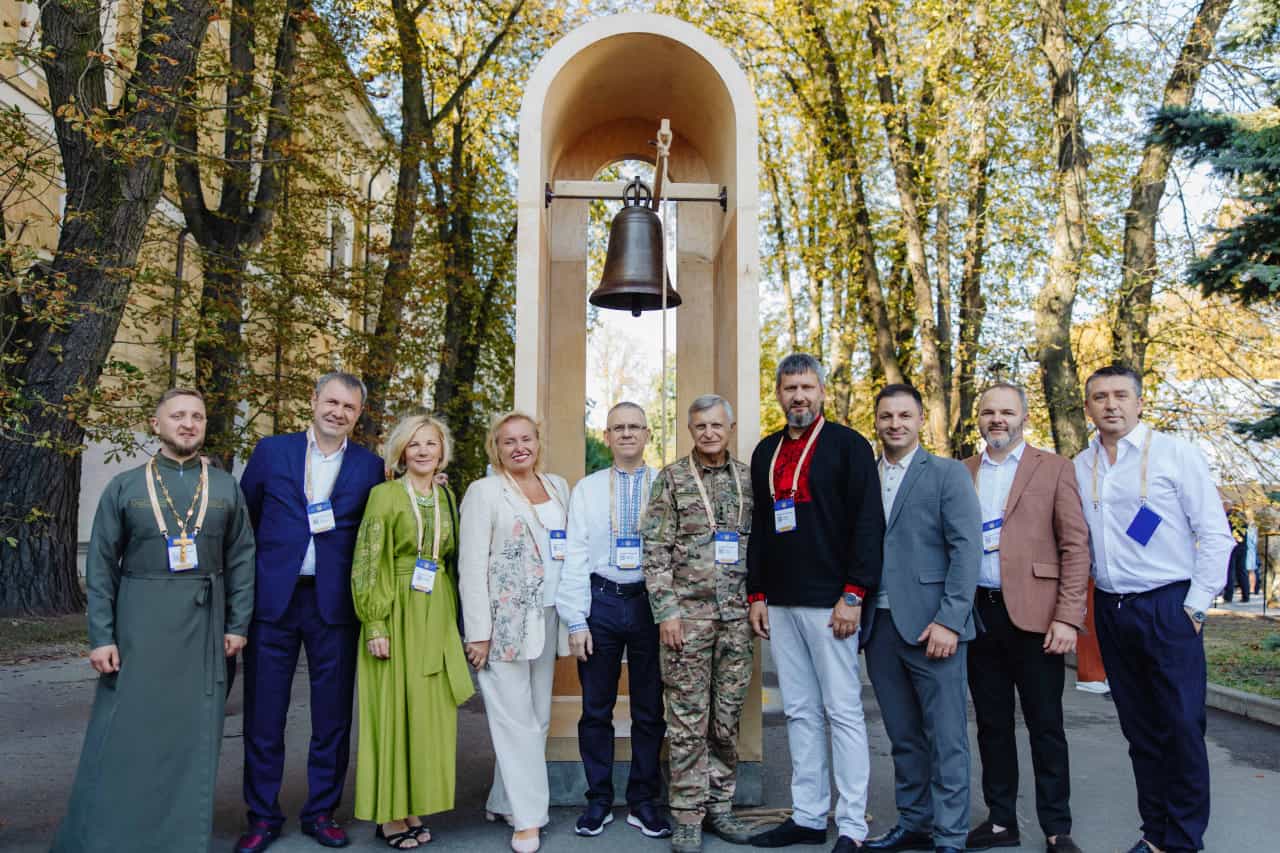
The recreated bell's sound was heard for the first time by guests of the National Prayer Breakfast on August 23.
Project Team
Maryna Strelnyk — Head of the Department of Ancient and Medieval History of Ukraine.
Lesia Didukh — Head of the Medieval History Sector at the National Museum of the History of Ukraine.
Yuliia Bezkorovaina — Head of the Medieval Archaeology Sector at the National Museum of the History of Ukraine.
Yurii But — Head of the Scientific Restoration Department at the National Museum of the History of Ukraine.
Serhii Naida — Doctor of Technical Sciences, Professor, Dean of the Faculty of Electronics at Igor Sikorsky Kyiv Polytechnic Institute.
Mykyta Naida — PhD, Assistant Professor at the Department of Acoustic and Multimedia Electronic Systems at Igor Sikorsky Kyiv Polytechnic Institute.
Royal Eijsbouts Team
The team of Royal Eijsbouts, Netherlands — the world’s largest foundry specializing in tower bells:
Miguel Carvalho (Portugal) — Co-Author of The Sound of Bronze, one of the key scientific studies in the field of digital reconstruction of historic bells; campanologist at Royal Eijsbouts, responsible for the physical, musical, and historical aspects of bells.
Joep van Brussel — Managing Director of Royal Eijsbouts, with 42 years of experience.
Project Consultants
Klaus Hammer (Germany) — PhD, certified bell expert and Scientific Director of the Bell Museum at the Collegiate Church in Herrenberg.
Bohdan Kindratiuk — Director of the Bell Studies Center, Doctor of Art History, Professor at Vasyl Stefanyk Carpathian National University, author of the monograph Bell-Ringing Culture of Ukraine.
Heorhii Chernenko — Honored Artist of Ukraine, Professor at the National Music Academy of Ukraine and the Luhansk State Academy of Culture and Arts, member of the European Carillon Association, and founder of the Kyiv Bell Ringers ensemble. He is the author of the first carillon projects in the Orthodox world at the bell towers of St Michael’s Monastery, St Sophia’s Cathedral, and other bell towers across Ukraine.
Interesting


Catalog
Trending Headlines


